
It’s a classic October scene here in Cuyahoga Falls. The leaves are turning, the air is crisp, and you’ve just run a heavy load of sweatshirts and muddy jeans after a weekend of yard work. You go to move the laundry to the dryer, but when you open the lid, you’re greeted by a pool of murky, soapy water. The cycle has finished, but your washer won’t drain. If this sounds familiar, you're not alone. My name is Derek Michalski, and with over 12 years of experience as an appliance repair technician, I’ve seen this exact scenario play out in countless homes. A washer that fails to drain is one of the most common issues my team and I encounter, especially in the fall when laundry loads get heavier and bulkier.
That standing water isn't just an inconvenience; it can lead to musty odors, mildew growth, and even water damage if not addressed. Fortunately, the cause is often something straightforward. Let's walk through the signs to look for and what might be causing the problem.
Common Signs and Symptoms
The most obvious sign, of course, is a tub full of water after a cycle. For a front load washer standing water in the drum is a clear red flag. But there are other, more subtle clues that can point to a developing drainage issue. Paying attention to these can help you catch a problem before it becomes a major headache.
Here are the key symptoms to watch for:
- A Humming or Buzzing Noise: One of the most telling signs is a washer humming not draining. This often means the drain pump motor is receiving power and trying to work, but something is physically blocking it from spinning. It's the sound of a motor straining against a clog.
- Water Drains Incredibly Slowly: If your clothes are coming out sopping wet, far wetter than usual, it could mean the washer is only partially draining. This slow drain is often an early warning sign of a clog forming in the hose or pump.
- The Cycle Stops Abruptly: Many modern washers have sensors that detect water levels. If the machine can't drain the water properly, it may pause the cycle indefinitely, often before the final spin. You might find it stuck with a full drum of water and time remaining on the display.
- Error Codes: Digital displays are a great diagnostic tool. Codes like "ND" (Not Draining), "F9 E1," or other model-specific errors are your washer’s way of telling you exactly where the problem is.
- Gurgling Sounds: Unusual gurgling noises coming from the drainpipe or utility sink during the drain cycle can indicate a partial blockage in your home's plumbing, not just the washer itself.
What Causes This Problem
Understanding what's behind your drainage problem is the first step toward fixing it. In my experience, the issue usually falls into one of a few categories, ranging from simple blockages to mechanical failures.
- A Clogged Drain Hose: This is the number one culprit. The corrugated hose that runs from the back of your washer to a standpipe or utility sink is a prime spot for lint, stray socks, pet hair, and other debris to build up. As we get into fall, I see more clogs from mud and even leaves that were hiding in jacket pockets. In many Cuyahoga Falls homes, especially the classic 1940s bungalows with basement laundry rooms, these drain hoses can have longer runs, creating more opportunity for blockages to form.
- An Obstructed or Failed Drain Pump: The drain pump is the heart of your washer's drainage system. It uses an impeller to force water out through the drain hose. Classic washer drain pump symptoms include the humming noise I mentioned earlier (indicating a jam) or, conversely, complete silence (indicating a failed motor). Small items like coins, buttons, or hairpins can slip past the drum and jam the pump's impeller.
- A Kinked Drain Hose: It sounds too simple, but it happens all the time. If you’ve recently moved your washer, the drain hose can get pinched or kinked behind the machine, cutting off water flow. The compact utility spaces in many post-war homes built in the 1940s can make this an easy mistake to make when trying to push the machine back into a tight spot.
- Lid Switch Malfunction (Top-Loaders): On most top-load washing machines, a safety feature prevents the machine from spinning and draining if the lid is open. If the lid switch assembly is broken, the washer thinks the lid is always open and will never start the drain cycle, even though the lid is physically closed.
- Excessive Suds: Using too much detergent, especially in a high-efficiency (HE) machine, can create a mountain of suds. The pump is designed to move water, not air-filled foam, and an overabundance of suds can cause it to air-lock, preventing it from draining properly. This can be a reason why a washer won’t drain even when there’s no clog.
- Household Plumbing Clogs: Sometimes, the washer is working perfectly, but the problem lies in your home's plumbing. The standpipe or utility sink drain that the washer empties into can become clogged. This is common in older homes, and the heavy leaf fall we see in October can sometimes contribute to blockages further down the main sewer line, causing backups into the laundry area.
When to Call a Professional
While some drainage issues are simple enough to check yourself, others are best left to an experienced professional to avoid causing a bigger mess or a more expensive repair.
Good First Steps for DIY Troubleshooting:
- Check for a Kinked Hose: Carefully pull the machine away from the wall to ensure the drain hose has a smooth, gentle curve with no sharp bends.
- Inspect the Standpipe: To see if your home's plumbing is the issue, you can slowly pour a gallon of water down the standpipe. If it backs up or drains very slowly, the clog is in your pipes, not the washer.
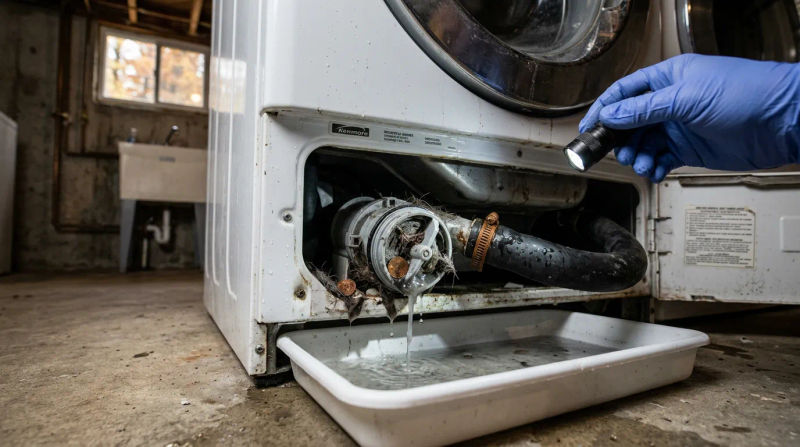
- Clean the Pump Filter: Many front-loading machines have a small, accessible filter (often called a "coin trap") located behind a small door on the bottom front of the unit. Placing a shallow pan and a towel underneath, you can unscrew this and clear out any accumulated lint and debris. Check your owner's manual for instructions.
It's Time to Call a Pro If:
- You’ve tried the simple checks and the washer won’t drain still.
- You hear grinding, scraping, or a loud hum, which strongly suggests a problem with the drain pump that requires disassembly.
- The repair involves removing panels and accessing internal components. This work involves water and electricity, and it’s crucial to have it done safely and correctly to prevent leaks or electrical hazards.
- You're dealing with persistent error codes that don't clear after a reset.
Conclusion
A washing machine that refuses to drain is a frustrating problem that brings your laundry routine to a halt. In most cases, the cause is a blockage in the drain line, an obstruction in the pump, or a simple kink in a hose. By paying attention to the signs, like a humming sound or overly wet clothes, you can often identify the issue early.
While some troubleshooting steps are safe for homeowners, repairs involving the drain pump or internal components require specialized knowledge. Don't let that puddle of front load washer standing water sit for days. Addressing the issue quickly prevents mildew and protects your appliance and your home from further damage.
If you notice any of these signs, contact a local Appliance Repair professional for an inspection.